
**Attendees will attend program meeting in its entirety, including required sign in, in the Zoom chat box, at the beginning of the presentation. Attendees will be asked to respond to presenter questions in the chat box (as indicated) and/or participate in posted polls (as indicated). Attendees will be required to complete the program evaluation, including but not limited to self-assessment, at the end of the course as well as ASHA bubble sheet (as appropriate for individuals seeking ASHA credit), using the posted google form links in the chat box at the end of the program meeting.
This course is offered for .2 ASHA CEUs (Intermediate level, Professional area)
Course Description:
The Capital Region hosts a diverse student population with over 45 languages represented. As the English as a New Language (ENL) population grows, so does the number of multilingual learners with disabilities. In a profession with a workforce that is overwhelmingly monolingual, it is important to equip practicing SLPs with knowledge and resources to provide ethical and evidence-based services. This short course is appropriate for providers working in schools, private practice, home,and community settings who encounter clients and families from linguistically diverse backgrounds.
Learning Outcomes – Attendees will be able to:
● Identify best practices on how to conduct multilingual evaluations.
● Select appropriate service delivery approaches including identifying indicators for referral to a bilingual or multilingual SLP.
● Support multilingual clients and families including countering misinformation about bilingualism and how to advocate for these students at the individual and school level for equitable access for services.
Time Ordered Agenda:
6:00-6:05pm: Introduction to speaker and course content
6:05-6:20pm: Bilingualism/Multilingualism definition, difference vs. disorder, BICS/CALP development
6:20-6:50pm: Multilingual assessment components and best practice
6:50-7:10pm: Working with interpreters
7:10-7:40pm: Service delivery models, when to refer, and how to bridge the gap
7:40-7:50pm: Advocacy and family-centered support
7:50-8:00pm: Q&A
Disclosures:
Financial Relationships:
None
Non-financial Relationships:
-Natalia is the owner of Natalia M. Martinez SLP PLLC, a private practice, serving students and school districts in the Capital Region.
**Attendees will attend program meeting in its entirety, including required sign in, in the Zoom chat box, at the beginning of the presentation. Attendees will be asked to respond to presenter questions in the chat box (as indicated) and/or participate in posted polls (as indicated). Attendees will be required to complete the program evaluation, including but not limited to self-assessment, at the end of the course as well as ASHA bubble sheet (as appropriate for individuals seeking ASHA credit), using the posted google form links in the chat box at the end of the program meeting.
This course is offered for .6 ASHA CEUs (Intermediate level, Professional area)
Course Description:
Learning Outcomes – Attendees will be able to:
● List the core features of functional intervention, Life Participation Approach, and Project-Based Intervention.
● Compare functional contextualized intervention with traditional speech therapy and describe how to blend these approaches.
● Describe how to implement the functional nature in services and interventions provided, as CSD professionals.
● Identify three interventions to implement over the course of the next month in order to combine traditional approaches with functional and/or project based intervention.
● Evaluate and identify person centered goals for service delivery.
Time Ordered Agenda:
8:15-8:30- Welcome and CASHA announcements
8:30-10:15- What do I mean by Context, Function, and Meaning? How does this get incorporated into evaluation and treatment? How does it relate to project-based intervention and life participation approach?
10:15-10:30- Morning break
10:30-12:00- How do you set person-centered/person-driven functional goals? How to use PROMs to look at progress, reevaluate goals, and maintain engagement.
12:00-1:00- Lunch break
1:00-3:00- Case studies- highlighting context, function, and meaning.
3:00-3:15- Afternoon break
3:15-3:45- How can you incorporate this into your own practice?
3:45-4:00- Wrap up and final questions.
Disclosures:
Financial Relationships:
-Julie is receiving an honorarium from CASHA.
Non-financial Relationships:
-Julie is the Director of the Aphasia Center at Sage Albany and is a volunteer coordinator for the Moving Message
Please contact us for any needed accommodations to access and participate in the program. cashawebwizard@hotmail.com
What speaker would you like to hear?
In Person Event
OR
Zoom Webinar?
June 2026
Zoom Webinar
Topic: Early Literacy
September 2026
Zoom Webinar
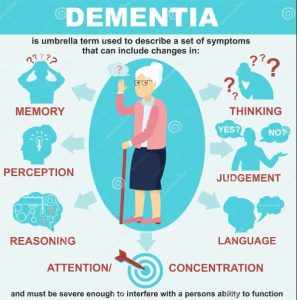
Topic: Dementia